Acoustic & Material Performance
Acoustic behavior, material properties, and real world performance constraints for professional interiors.
Table of contents
#Acoustic performance is not a material claim
Acoustic comfort is rarely solved by selecting an “acoustic material”. It is solved by specifying the right assembly, in the right location, for the right frequency problem.
A material can be promising on paper and still underperform in a real interior once layout, ceiling height, glass, HVAC noise, and furniture are introduced. That gap between lab claims and lived experience is where most acoustic disappointments happen.
#Absorption vs isolation
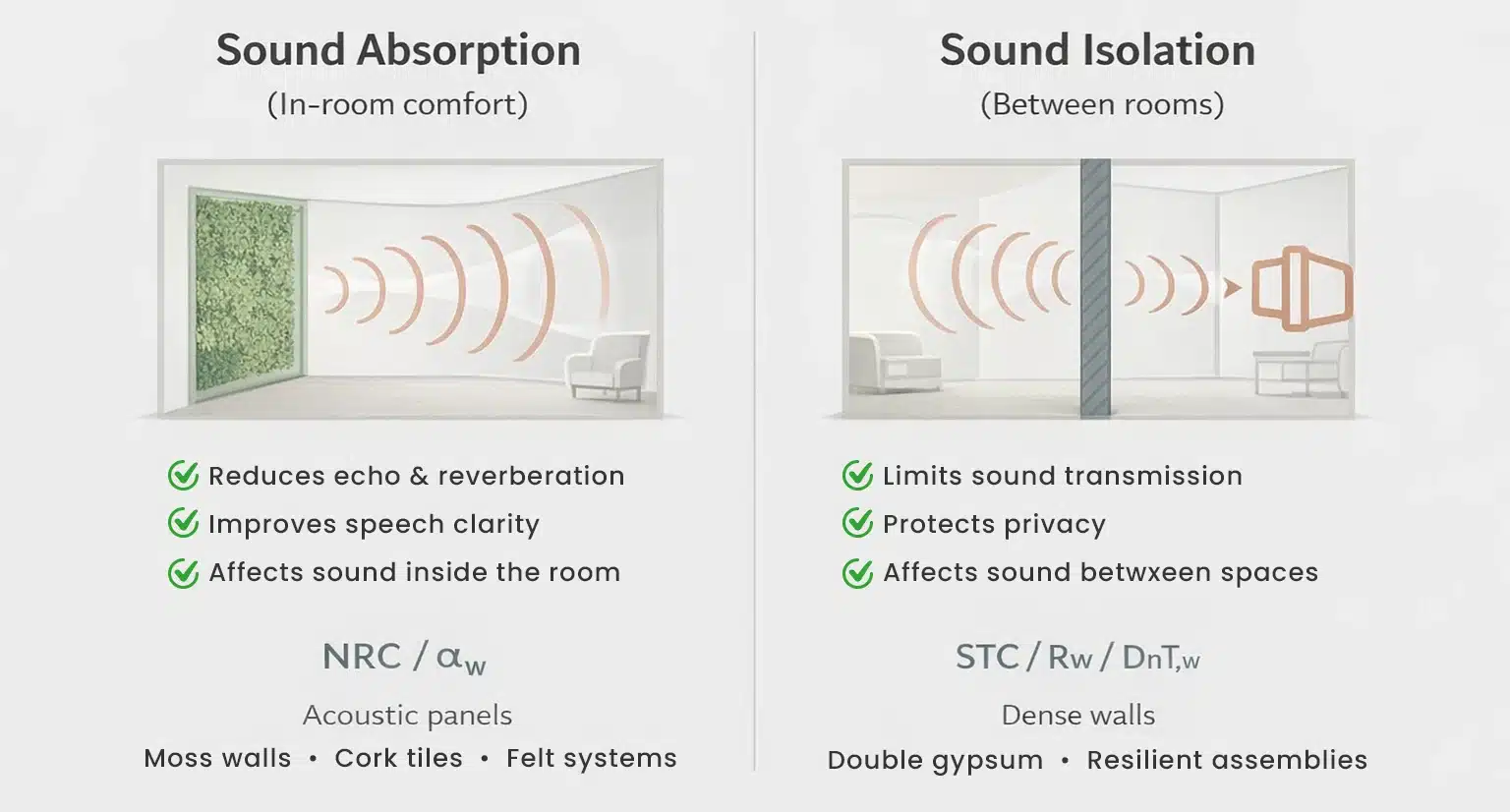
One of the most common specification errors is mixing absorption with isolation.
Absorption
Absorption reduces reverberation inside a room and improves clarity, comfort, and speech intelligibility. This is what most interior acoustic panels target.
Isolation
Isolation reduces sound transmission between spaces. It depends on mass, airtightness, and construction details. Soft surface materials rarely solve isolation problems on their own.
#What NRC and ratings can and cannot tell you
NRC and absorption ratings are useful, but they are not a guarantee of comfort. They do not describe space geometry, placement, directionality, or the low frequency buildup that dominates many open plan environments.
A practical way to read ratings
- Use ratings to compare options, not to predict a final experience.
- Ask what configuration was tested, thickness, backing, air gap, mounting method.
- Confirm the problem you are solving: echo, speech privacy, overall noise level, or transmission.
#The frequency problem
Many interiors fail acoustically because the solution targets the wrong frequency range. Mid and high frequencies are easier to absorb. Low frequencies are harder, and often more disturbing in open workplaces.
That is why a good strategy balances surface absorption, spatial zoning, and practical constraints such as ceiling services and architectural intent.
#Assembly effects
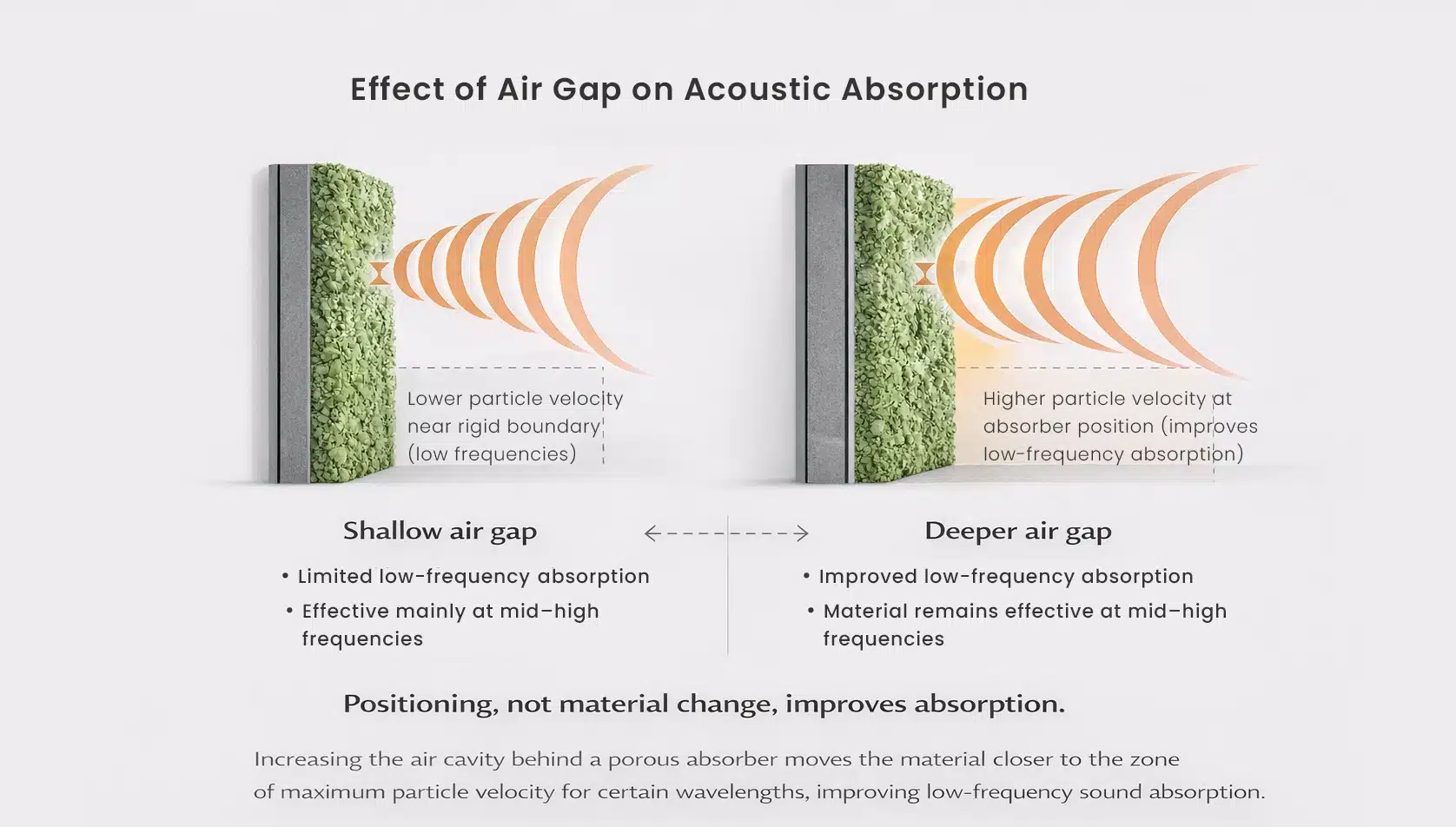
Acoustic behavior changes significantly depending on assembly details. Two products with similar surface appearance can behave differently once mounted.
What typically changes performance
- Thickness and density
- Backing material and stiffness
- Air gaps behind panels
- Edge conditions and seams
- Mounting method and contact points

#Real world constraints in offices
In workplaces, acoustic discomfort is rarely caused by one single source. It is typically a combination of speech, collaboration zones, hard surfaces, glass, and HVAC background noise.
Common constraints that shape what is possible
- Open plan layouts and shifting teams
- Ceiling services and lighting that limit overhead absorption
- Glazing and hard finishes that increase reflections
- Brand driven design requirements that reduce surface coverage
- Maintenance expectations in occupied environments
#Biophilic materials and preserved moss
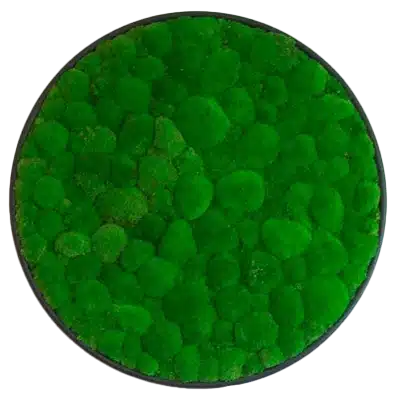
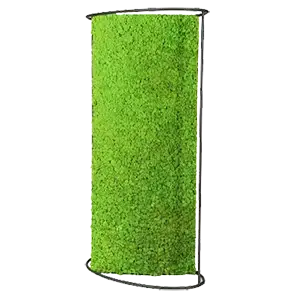
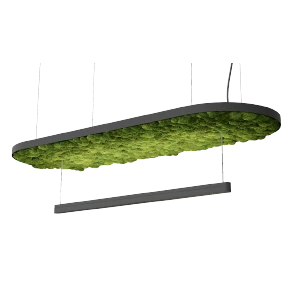
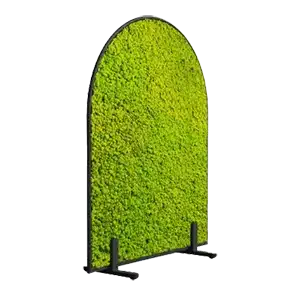
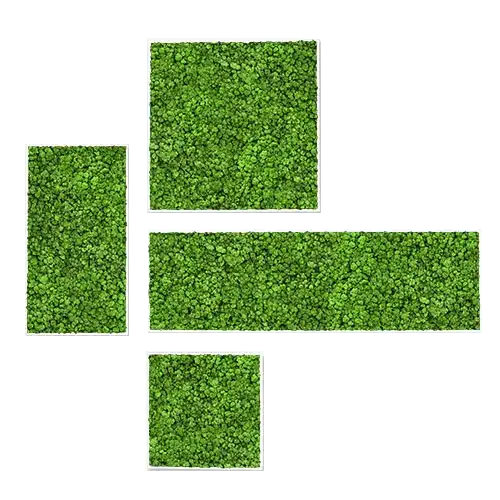
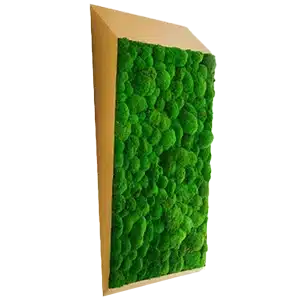
Preserved biophilic materials can support acoustic strategies when specified as part of a complete assembly. They contribute to absorption and a calmer visual atmosphere, but they do not replace system thinking around placement, backing, and targets.
In practice, the best outcomes happen when biophilic systems are placed where people spend time and combined with an acoustic plan that addresses the full space.
#Cork and natural materials
Cork is often selected for natural material strategies and its tactile qualities. Acoustic performance depends on thickness, density, installation method, and whether the assembly targets the frequency range that actually causes discomfort.
In other words, “cork” is not a performance guarantee. The assembly is the performance.
#Measured outcomes
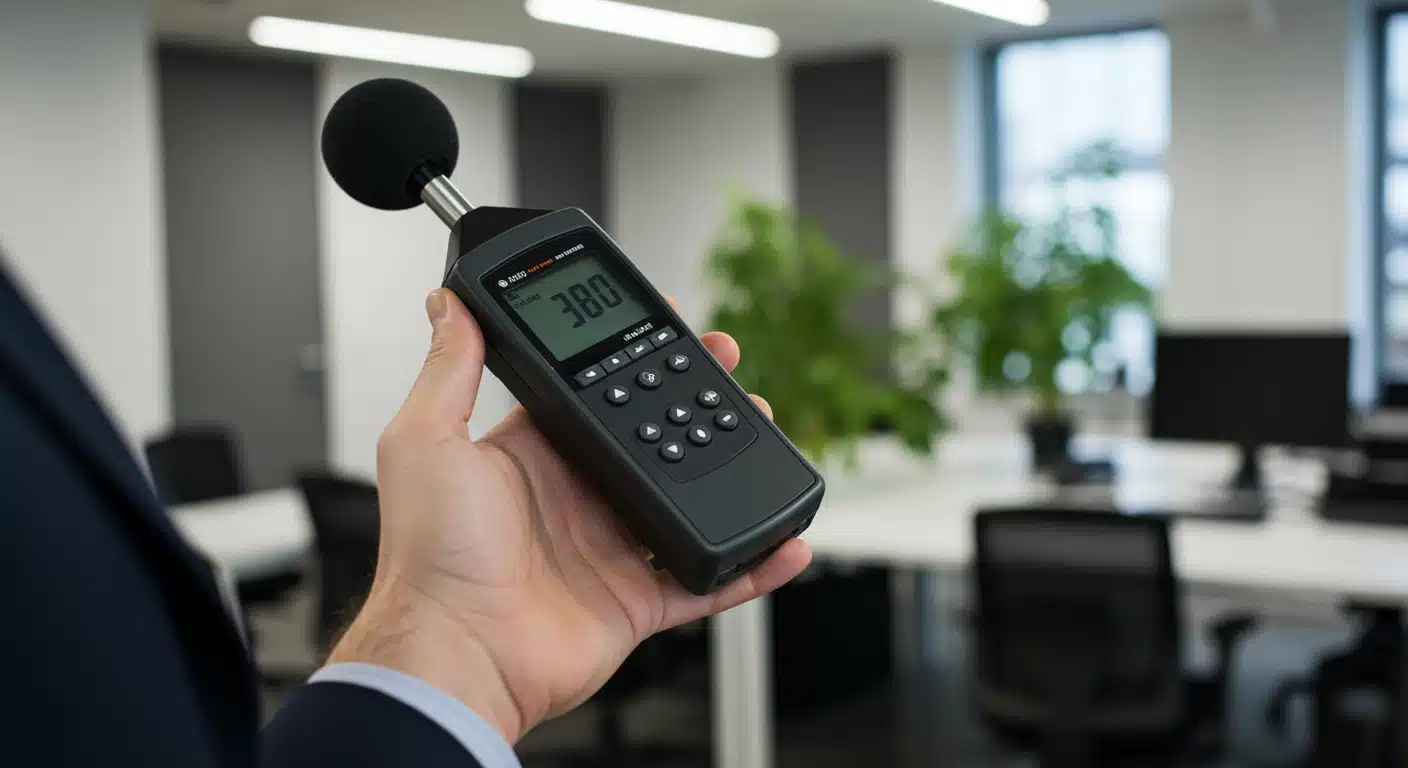
In complex projects, relying on product sheets alone is rarely enough. That is why Greenmood can collaborate with acoustic specialists to establish baseline conditions and validate results before and after installation.
What this enables
- Evidence based decisions when acoustic comfort is critical
- Clear documentation for project teams and stakeholders
- Realistic expectations aligned with site constraints
#Documented acoustic performance (laboratory data)
To move beyond material narratives, acoustic performance must be supported by measured data.
The values presented below are based on laboratory measurements carried out in reverberation rooms, following recognized international standards (ISO 354 / ISO 11654 and ASTM C423).
These results provide a comparative reference for understanding how different biophilic and acoustic materials behave in controlled conditions, using standardized mounting configurations.
They are intended to support early-stage design decisions, specification discussions, and documentation workflows, not to replace project-specific acoustic studies.
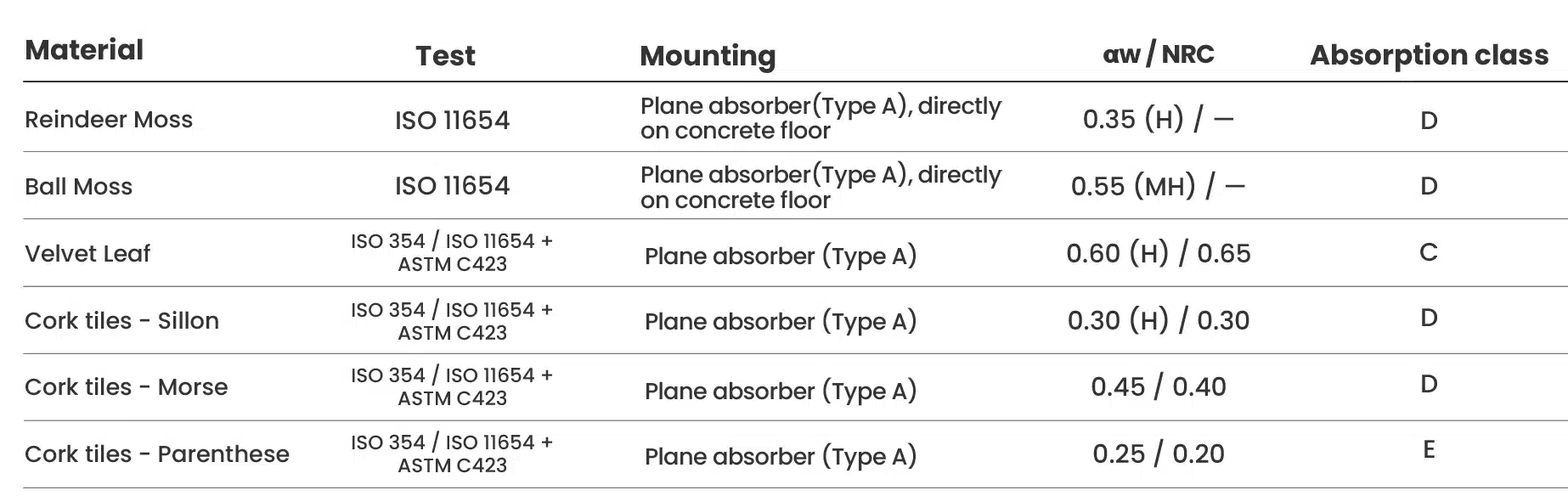
Measured data informs decisions. Assemblies and positioning determine results.
The indicators shown (αw, NRC, SAA and absorption class) describe how efficiently a material absorbs sound energy under standardized test conditions.
They are useful for
- comparing materials on a consistent basis
- identifying suitable absorption ranges for mid and high frequencies
- supporting acoustic intent within specification documents
However, these values should not be interpreted as guarantees of in-situ performance.
Laboratory absorption coefficients represent idealized conditions. In real projects, acoustic performance is influenced by multiple factors, including:
- mounting configuration and backing
- presence or absence of air gaps
- surface continuity and junctions
- room volume, geometry, and finishes
- distribution of absorptive surfaces within the space
As a result, identical materials can perform very differently once installed.
This is why acoustic outcomes should be approached at assembly and system level, not as isolated material properties.
In professional interiors, the most reliable results come from combining documented material data with
- clear assembly definitions
- appropriate positioning within the space
- validation through calculation or measurement where required
At Greenmood, acoustic data is used as a decision-support tool, not a marketing claim. Depending on project complexity, we work in coordination with acoustic specialists to estimate required absorption surface areas, validate strategies through RT60 calculations, and assess before and after conditions on selected projects. This approach helps align material choices with realistic performance expectations in occupied environments.
#What project teams should request
If a supplier cannot explain what was tested, how it was installed, and what the system includes, the specification is fragile by default.
#Greenmood’s approach
Greenmood approaches acoustic and biophilic solutions as systems designed for professional interiors. The priority is to reduce ambiguity during specification and support stable, predictable results in occupied environments.
Our focus
- Assembly clarity and specification support
- Documented performance where applicable
- Durability and serviceability in real projects
- Optional collaboration with acoustic specialists on complex scopes
Specification & Performance Guide
To support teams moving from design intent to real-world implementation, we’ve prepared a dedicated reference document focused on the specification and performance of biophilic acoustic assemblies in professional interiors.
The guide consolidates assembly logic, acoustic behavior considerations, documentation expectations, and validation principles commonly required during specification and project reviews.
Download the specification & performance guide#Resources
If you want to go deeper, these resources help clarify the difference between material narratives and real world acoustic performance.
Industry references
- Amorim: Materials vs performance
- Ekko: Acoustic materials and the language of quiet design
- Impact Acoustic: Acoustic performance overview
- EMPA: Acoustic performance of engineered materials
- MDPI: Acoustic materials research overview
Final takeaway
Acoustic comfort is a system outcome. Specify assemblies, target the right frequencies, and validate performance against real constraints. That is how quiet interiors stay quiet after handover.
Measured performance always depends on room volume, surface ratios and sound field conditions.