


Sustainability, Biophilic Acoustics & LEED v5
How biophilic and acoustic materials can support sustainability strategies and documentation workflows aligned with LEED v5.
Table of contents
#Why LEED v5 feels different
LEED v5 moves sustainability conversations away from isolated features and toward verified performance. For project teams, this changes how materials should be discussed, documented, and defended.
A biophilic wall can still be a strong design decision, but in LEED v5 the value is clearer when it connects to measurable outcomes such as carbon reduction pathways, healthy indoor environments, and long-term durability.
The practical takeaway: when a product cannot be explained through clear documentation and stable long-term behavior, it becomes harder to support in a sustainability strategy, even if it looks right on day one.
#The impact areas, translated for interiors
LEED v5 is organized around three impact areas: decarbonization, quality of life, and ecological conservation and restoration. In parallel, themes such as equity and resilience are more visible across prerequisites and credits, influencing how teams frame scope and evidence.
Decarbonization
- What is the embodied carbon profile of what we install?
- Can we quantify and reduce impacts early enough to influence selection decisions?
- Are we designing for long life and adaptability to avoid premature refits?
Quality of life
- Are we protecting indoor air quality and sensory comfort in occupied environments?
- Do occupants experience a calmer acoustic environment and restorative contact with nature?
- Is the strategy repeated across the floorplate or limited to a single gesture?
Ecological conservation and restoration
- Are products responsibly sourced, traceable, and aligned with circular thinking?
- Can systems be serviced, repaired, or partially replaced without full demolition?
- Do procurement choices support better supply chain practices over time?
Biophilic and acoustic decisions can contribute to all three, but only when they are framed as systems with verifiable performance and documentation.
#What changes at the top end
LEED v5 raises expectations, especially for teams targeting the highest certification levels. This pushes decisions upstream: electrification strategies, renewable energy planning, energy performance, and low embodied carbon become harder to postpone.
For interiors, the implication is simple. Product decisions must support a broader decarbonization and health narrative, with documentation that can be used during reviews.
#Materials are now a carbon and health decision
In LEED v5, materials are not a secondary checklist. They sit directly in the sustainability narrative, especially through embodied carbon intent and product selection expectations.
This changes what project teams should ask suppliers. Not “is it sustainable?”, but “can you document carbon inputs, emissions approach, sourcing, and end-of-life pathways in a usable way?”
Many LEED v5 discussions also reference longer time horizons when assessing carbon outcomes. A practical interpretation for interiors is to avoid choices that trigger early replacement, since durability and adaptability influence lifecycle impacts.

What this means for biophilic and acoustic products
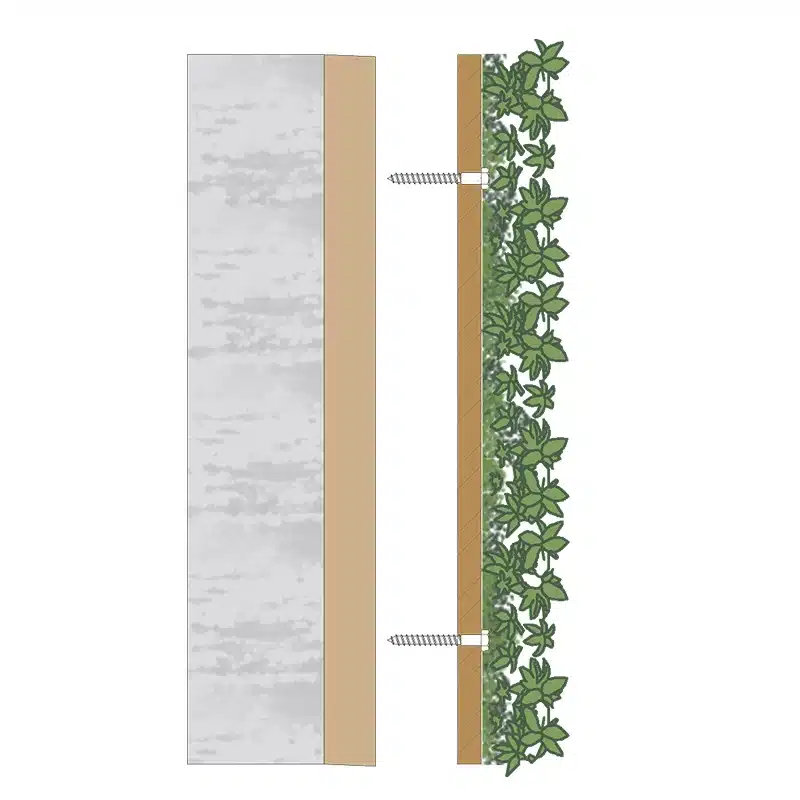
- Assembly clarity so the scope is verifiable, not ambiguous.
- Emission discipline to support indoor air quality thinking in occupied buildings.
- Procurement transparency that avoids vague claims and focuses on traceable attributes.
- Durability that reduces replacement cycles and waste.
#Biophilic strategies that hold up under review
Biophilic design is often described as a feeling. In performance-led frameworks, it becomes stronger when it is designed as a repeatable strategy with occupant impact.
In practical terms, this means biophilia should be present where people spend time, not only in circulation or as a single hero feature. It should remain stable over time so the intended experience does not degrade.
What “sustained engagement with nature” looks like in a space
- Biophilic elements placed in daily-use zones, not only in lobbies.
- Multiple touchpoints across the plan so the experience is repeated.
- Integration with lighting and layout to keep textures and depth legible.
- Clear maintenance guidance and long-term appearance stability.
Preserved systems can be relevant in commercial interiors because they avoid irrigation and biological growth variables. That stability supports predictable long-term behavior, which fits performance-oriented narratives.
#Acoustic comfort as a quality of life strategy
Acoustic performance is often treated as a late technical layer. But noise directly affects concentration, recovery, stress levels, and privacy.
This is why acoustic comfort increasingly belongs in sustainability conversations. A space that looks “green” but feels stressful to use often triggers rework, additional materials, and premature refits.

Acoustics that support quality of life narratives
- Sound zoning with clear sensory gradients across the workplace.
- Quiet retreat spaces that reduce overstimulation in open environments.
- Absorption where it matters in open-plan, collaboration zones, and transitions.
- Material integrity that preserves performance over time.
One of the most sustainable interiors is the one that does not need to be redone. Acoustic comfort protects longevity.
#How to specify biophilic acoustic systems responsibly
Biophilic and acoustic materials can strengthen sustainability strategies when specified with system thinking. That includes what the product is made of, how it is assembled, how it is installed, and how it behaves over time.
Four specification principles that hold up in LEED v5 contexts
- Assembly clarity: define what is included and what is not, including backing, frame, and fixings.
- Emission discipline: avoid uncontrolled site adhesives when possible and document installation pathways.
- Adaptability: favor systems that can be reconfigured or partially replaced.
- Serviceability: keep maintenance simple, documented, and compatible with occupied operations.
#What documentation project teams actually need
Many certification issues do not come from product performance. They come from missing documentation, unclear scope, or claims that cannot be backed up at review stage.
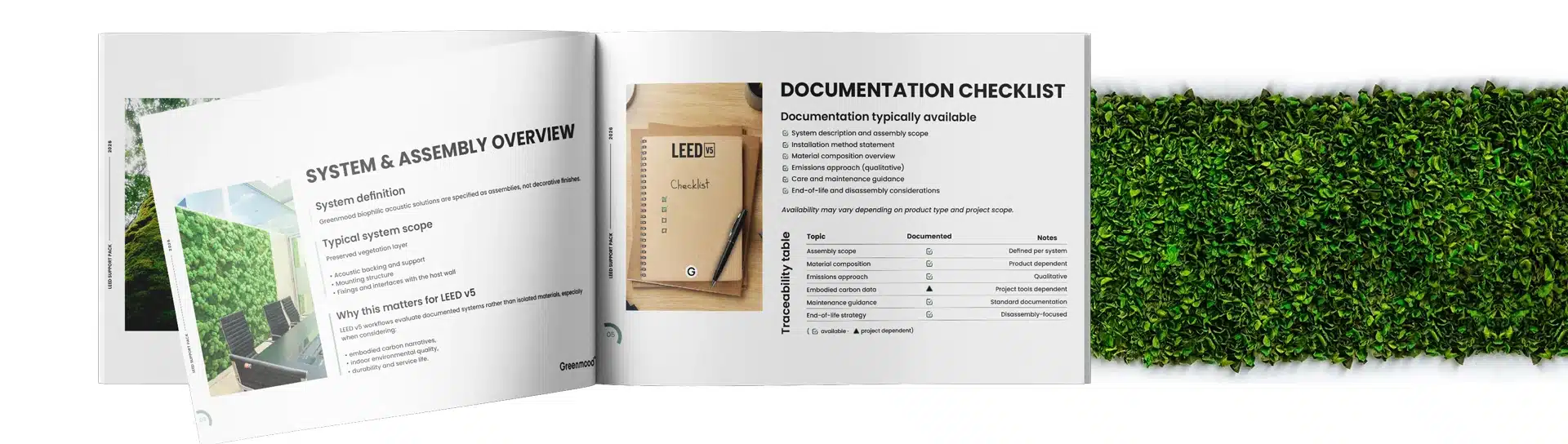
A strong documentation pack typically includes
- Assembly description (layers, materials, interfaces).
- Installation method statement with clear scope boundaries.
- Emissions approach relevant to indoor environmental quality workflows.
- Embodied carbon readiness inputs (composition, scope, and data that can support assessment tools).
- Care and maintenance guidance supporting long-term behavior.
- End-of-life guidance on disassembly, separation, reuse, and recycling pathways.
Important note: we provide documentation intended to support project teams during certification and compliance processes. Final credit applicability depends on project scope, rating system, and consultant assessment.
#Common mistakes that weaken sustainability narratives
These patterns repeatedly create problems during sustainability reviews, even when design intent is strong.
Sustainability is not only about what is installed. It is also about how long the design remains valid.
#Greenmood’s approach to sustainability alignment
At Greenmood, we design biophilic and acoustic solutions for professional interiors where predictability matters. The goal is to support project teams with systems that integrate cleanly, document clearly, and maintain stable behavior over time.
What this means in practice
- Preserved vegetation selected for long-term stability and consistent appearance.
- Acoustic integration designed to improve daily comfort, not only visual impact.
- Clear assembly documentation to reduce ambiguity during specification and reviews.
- A focus on serviceability and responsible maintenance planning for occupied operations.
When biophilic systems are specified as durable assemblies that support real occupant outcomes, they become easier to position inside LEED v5 sustainability strategies and certification reviews.
#Resources
If you are building a LEED v5 certification narrative, these resources help align terminology, documentation expectations, and review logic used by project teams and consultants.
Official LEED v5 references
Independent analysis and commentary
- AIA: What you should know about LEED v5
- BuildingGreen: LEED v5 analysis
- GBD Magazine: LEED v5 overview
Final takeaway
Biophilic and acoustic materials can meaningfully contribute to LEED v5 sustainability strategies. The difference is documentation and long-term behavior. Treat systems as measurable assemblies, integrate them into occupant experience, and support teams with evidence that stands up in reviews.